VFR · Lesson 62 · 9 min · ACS PA.I.H
When Your Senses Lie: Disorientation, Motion Sickness, Ears and Night Vision
Reviewed by a panel of three CFIs + AI review
Summary
The inner ear causes spatial disorientation and motion sickness, so trust instruments and manage the cabin. Equalize ear and sinus pressure on descent and avoid flying congested, and use off-center viewing after dark-adapting for night flight.
Also watch
Quick check ▾
One question on what you just read.
Question 1 of 1
Spatial disorientation and vestibular illusions · Topic mastery: Not started
Exit0 of 1 answered
The best way to overcome spatial disorientation is to do what?
Why this matters in flight
Your body was not built for flight, and its balance and vision systems can feed you dangerously wrong information. Knowing how the inner ear, the eyes, and the sinuses can betray you lets you override false sensations before they lead to loss of control.
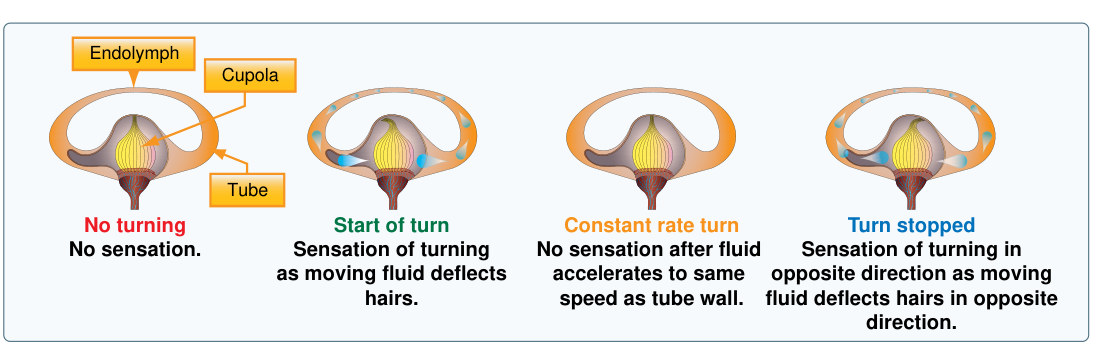
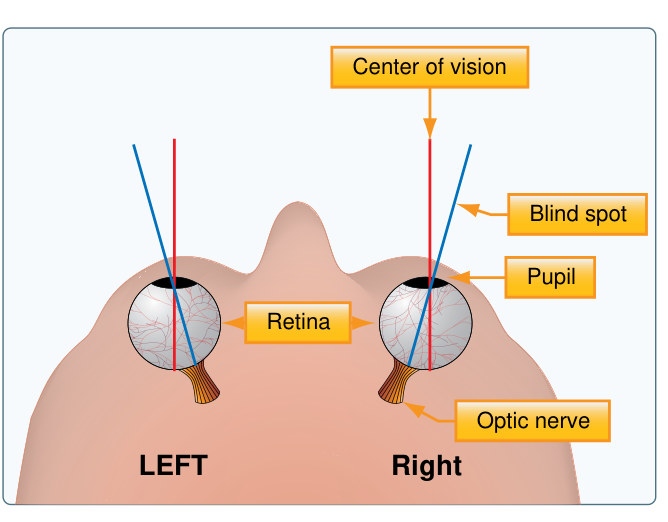
Spatial disorientation is the inability to correctly sense attitude, altitude, or motion, and it usually strikes when outside references are lost and the inner ear sends false cues. Illusions such as the leans, the graveyard spiral, and the somatogravic illusion can convince a pilot of a turn or climb that is not happening; the only reliable cure is to trust the flight instruments over bodily sensation. Motion sickness comes from the eyes and inner ear disagreeing about motion, and it is worse with anxiety or turbulence — open the vents, fix your eyes on a point outside, and minimize head movement. The pressures inside the ears and sinuses must also equalize as you change altitude, which is hardest during descent; a pilot flying with a cold can suffer a painful ear or sinus block, so the best defense is not flying with significant congestion. Finally, night vision relies on the rod cells at the edges of the retina, which see no color and are missing at the very center of vision, so pilots use off-center viewing and allow about 30 minutes to fully dark-adapt.
Key terms
- Spatial disorientation
- Inability to correctly sense the aircraft’s attitude, altitude, or motion.
- The leans
- A common vestibular illusion of banking when the wings are actually level.
- Ear/sinus block
- Trapped pressure during altitude change, often from flying with a cold.
- Off-center viewing
- Looking slightly to the side of an object to use the light-sensitive rods at night.
Sources & references · 4 · 4 linked
Every claim traces to a source — paraphrased knowledge elements pointing at the governing FAA publication. Items marked verified have been checked against the retrieved source text; the rest are pending verification. Where the exact page or regulation has been located in a retrieved document, the source links straight to it.
- PHAK Ch. 17 / spatial disorientation and illusions — Pilot’s Handbook of Aeronautical Knowledge verifiedPHAK Ch. 17 (p. 423)
- PHAK Ch. 17 / motion sickness — Pilot’s Handbook of Aeronautical Knowledge verifiedPHAK Ch. 17 (p. 423)
- PHAK Ch. 17 / middle ear and sinus block — Pilot’s Handbook of Aeronautical Knowledge verifiedPHAK Ch. 17 (p. 423)
- AIM 8-1 / night vision — Aeronautical Information Manual verifiedAIM 8-1 (p. 641)
Community
Ask for more detail or suggest additions to make this lesson better. Community input — not authoritative and not CFI-reviewed.
Sign in or create a free account to join the conversation.
No comments yet — be the first to help improve this lesson.