VFR · Lesson 55 · 7 min · ACS PA.I.D · ACS PA.VI
Fuel Planning and Legal Reserves
Reviewed by a panel of three CFIs + AI review
Summary
Add taxi, climb, cruise burn, and reserve. The VFR floor is destination plus 30 minutes by day and 45 minutes at night — treat it as a floor, not a goal, and pad it.
Also watch
Quick check ▾
One question on what you just read.
Question 1 of 1
Time-speed-distance and fuel planning · Topic mastery: Not started
Exit0 of 1 answered
At a groundspeed of 120 knots, how long does a 60-nautical-mile leg take?
Why this matters in flight
Fuel exhaustion is an avoidable cause of accidents, and it is entirely a planning problem. The regulation sets a legal floor for reserves, but the number you actually load should be higher.
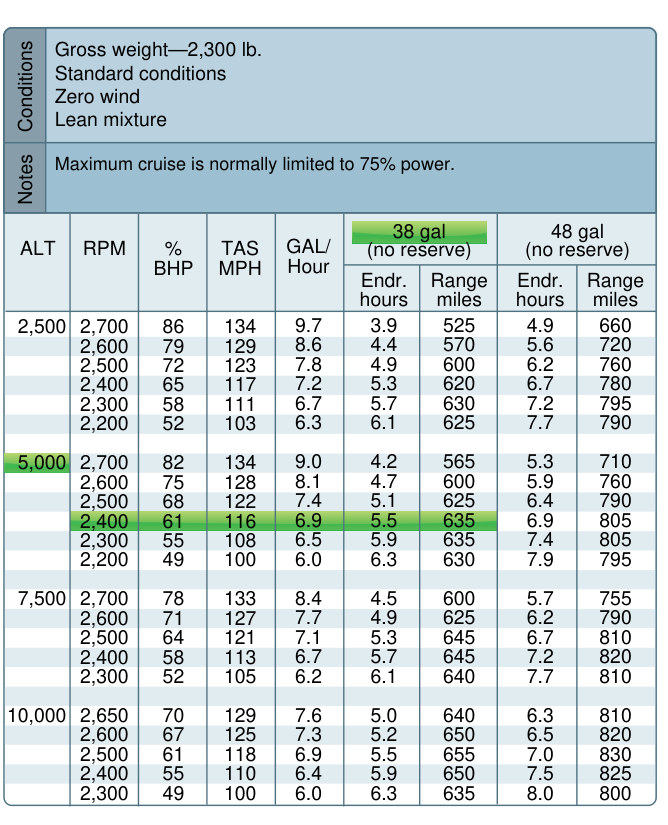
A complete fuel plan adds up every phase of flight: taxi and run-up, takeoff and climb, cruise on each leg, and a reserve you must not touch. Cruise burn comes from multiplying each leg time by the fuel-burn rate in the performance charts. On top of the fuel needed to reach the destination, the regulations require a reserve. For VFR, you may not begin a flight unless, at normal cruise, you could fly to the first point of intended landing and then continue for at least 30 minutes during the day or at least 45 minutes at night. These are minimums, not targets. Winds are rarely exactly as forecast, and a diversion or a full-stop delay can eat into the plan, so experienced pilots build in a comfortable margin above the legal reserve and re-check fuel at each checkpoint against what they planned to burn.
Key terms
- VFR day reserve
- Fuel to reach the destination plus 30 minutes at normal cruise during the day.
- VFR night reserve
- Fuel to reach the destination plus 45 minutes at normal cruise at night.
- Fuel burn rate
- Gallons per hour from the performance charts used to compute fuel required.
Sources & references · 2 · 2 linked
Every claim traces to a source — paraphrased knowledge elements pointing at the governing FAA publication. Items marked verified have been checked against the retrieved source text; the rest are pending verification. Where the exact page or regulation has been located in a retrieved document, the source links straight to it.
- 14 CFR 91.151 — 14 CFR Part 91 — General Operating and Flight Rules verified14 CFR 91.151
- PHAK Ch. 16 / time-speed-distance and fuel — Pilot’s Handbook of Aeronautical Knowledge verifiedPHAK Ch. 16 (p. 388)
Community
Ask for more detail or suggest additions to make this lesson better. Community input — not authoritative and not CFI-reviewed.
Sign in or create a free account to join the conversation.
No comments yet — be the first to help improve this lesson.