VFR · Lesson 12 · 9 min · ACS PA.VII · ACS PA.I.G
Stalls and Load Factor
Reviewed by a panel of three CFIs + AI review
Summary
Stalls are about exceeding the critical angle of attack, so they can happen at any speed; recover by lowering the angle of attack. Higher bank raises load factor, which raises stall speed.
Also watch
Quick check ▾
One question on what you just read.
Question 1 of 1
Stalls and the critical angle of attack · Topic mastery: Not started
Exit0 of 1 answered
A wing stalls when it exceeds what?
Why this matters in flight
A stall is the loss of lift behind the most common loss-of-control accidents, and load factor is why a steep turn can stall you at a surprisingly high airspeed. Together they explain the single most important safety concept in low-speed flight.
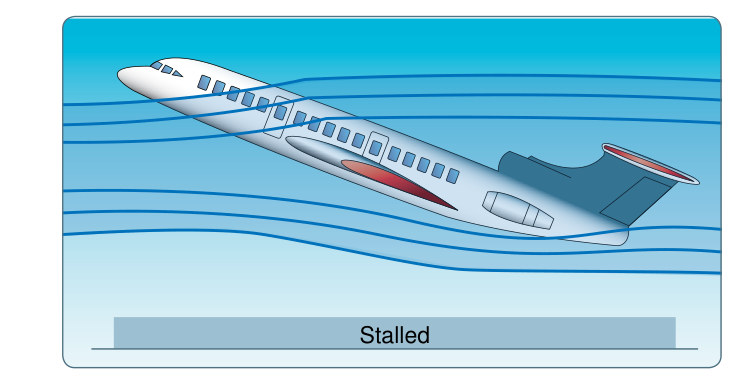
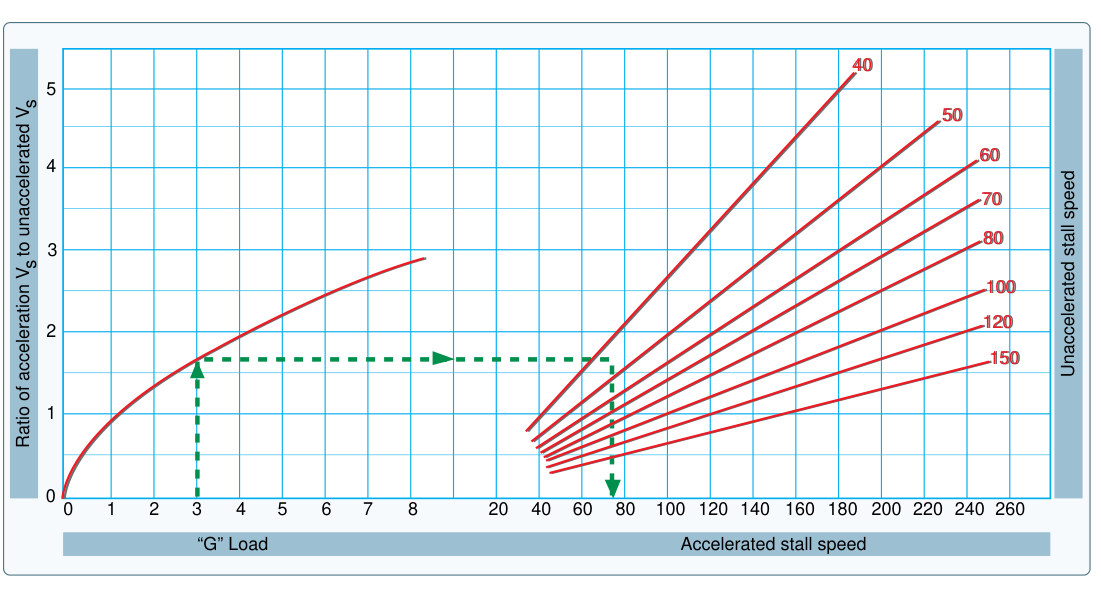
A wing stalls when it exceeds its critical angle of attack — the airflow separates from the upper surface and lift drops sharply. The key insight is that a stall is defined by angle of attack, not airspeed or attitude, so an airplane can stall at any airspeed and in any attitude, including a fast, nose-low steep turn. Recovery always starts with reducing the angle of attack. Load factor ties directly into this: load factor is the ratio of lift to weight, measured in g. Banking in level flight requires extra lift, so load factor climbs with bank angle — roughly 2 g at 60 degrees of bank. Because the wing must work harder, the stall speed increases with the square root of the load factor, which is why the airplane stalls at a higher indicated airspeed in a steep turn than it does wings-level.
Key terms
- Critical angle of attack
- The angle of attack beyond which the wing stalls.
- Load factor
- The ratio of total lift to weight, expressed in g.
- Accelerated stall
- A stall at higher-than-normal airspeed caused by increased load factor.
Sources & references · 2 · 2 linked
Every claim traces to a source — paraphrased knowledge elements pointing at the governing FAA publication. Items marked verified have been checked against the retrieved source text; the rest are pending verification. Where the exact page or regulation has been located in a retrieved document, the source links straight to it.
- Airplane Flying Handbook FAA-H-8083-3 — Airplane Flying Handbook verifiedFAA-H-8083-3C (p. 137)
- PHAK Ch. 5 — Pilot’s Handbook of Aeronautical Knowledge verifiedPHAK Ch. 5 (p. 98)
Community
Ask for more detail or suggest additions to make this lesson better. Community input — not authoritative and not CFI-reviewed.
Sign in or create a free account to join the conversation.
No comments yet — be the first to help improve this lesson.