VFR · Lesson 79 · 8 min · ACS PA.I.F · ACS PA.II · ACS PA.XII
Runway, Performance and Fuel Requirements
Reviewed by a panel of three CFIs + AI review
Summary
Compute takeoff/landing distances against the runway for the day’s conditions, and carry at least 30 minutes (day) or 45 minutes (night) of VFR reserve beyond the first landing point.
Also watch
Quick check ▾
One question on what you just read.
Question 1 of 1
Runway lengths and performance · Topic mastery: Not started
Exit0 of 1 answered
Which condition increases the takeoff distance required?
Why this matters in flight
Two of the most common ways to have a bad day are running out of runway and running out of fuel. Both are prevented on the ground with a chart and a little arithmetic before you ever start the engine.
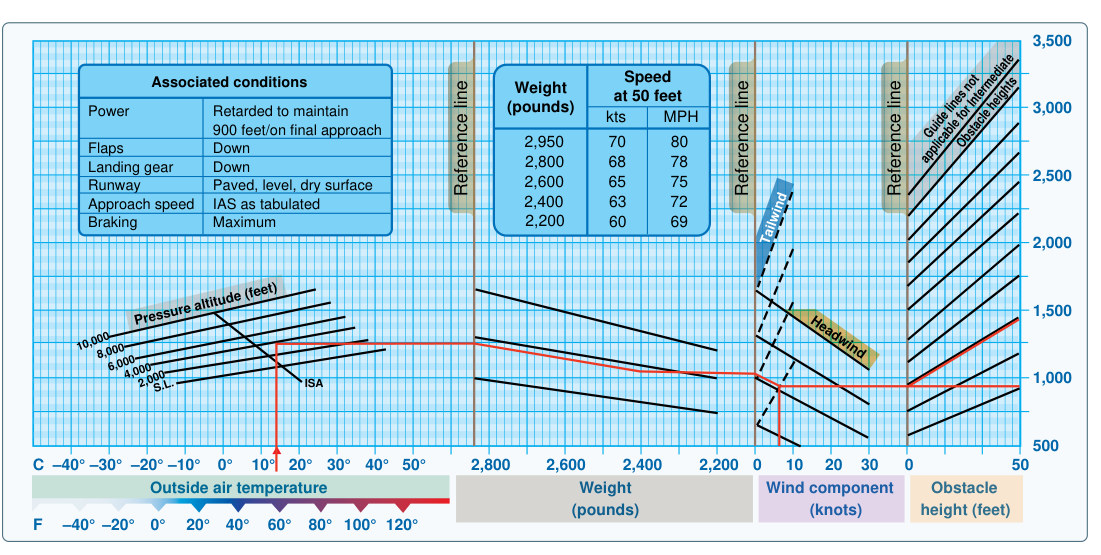
Runway planning means using the flight manual performance charts to find the takeoff and landing distances for the day’s actual weight, pressure altitude, temperature, wind, and runway surface, then confirming the available runway leaves a comfortable margin. Remember that high density altitude, a tailwind, an upslope, or a soft or wet surface all lengthen the distance you need. Fuel planning has a legal floor: for VFR you may not begin a flight unless, allowing for wind and forecast conditions, you can reach the first point of intended landing and then fly at normal cruise for at least 30 minutes in the day or 45 minutes at night. Those are minimums, not targets — a sensible personal reserve is larger, because headwinds, diversions, and a fuel gauge’s imprecision all eat into the margin.
Key terms
- Density altitude
- Pressure altitude corrected for temperature; high values lengthen takeoff distance.
- VFR fuel reserve
- 30 minutes by day and 45 minutes at night beyond the first point of intended landing.
Sources & references · 2 · 3 linked
Every claim traces to a source — paraphrased knowledge elements pointing at the governing FAA publication. Items marked verified have been checked against the retrieved source text; the rest are pending verification. Where the exact page or regulation has been located in a retrieved document, the source links straight to it.
- PHAK Ch. 11 / 14 CFR 91.103 — Pilot’s Handbook of Aeronautical Knowledge verified14 CFR 91.103PHAK Ch. 11 (p. 257)
- 14 CFR 91.151 — 14 CFR Part 91 — General Operating and Flight Rules verified14 CFR 91.151
Community
Ask for more detail or suggest additions to make this lesson better. Community input — not authoritative and not CFI-reviewed.
Sign in or create a free account to join the conversation.
No comments yet — be the first to help improve this lesson.