VFR · Lesson 18 · 6 min · ACS PA.I.G
The Electrical System
Reviewed by a panel of three CFIs + AI review
Summary
The alternator charges the battery and powers the bus, the battery starts the engine and backs up the system, and the ammeter reveals charging or discharging; after an alternator failure, shed nonessential load and land before the battery runs down.
Also watch
Quick check ▾
One question on what you just read.
Question 1 of 1
Electrical system · Topic mastery: Not started
Exit0 of 1 answered
If the alternator fails in flight, what is the appropriate pilot action?
Why this matters in flight
Radios, lights, and many instruments depend on electrical power, and recognizing an alternator failure early lets you shed load and land with the equipment you still need. A misread ammeter can turn a minor issue into a dark cockpit.
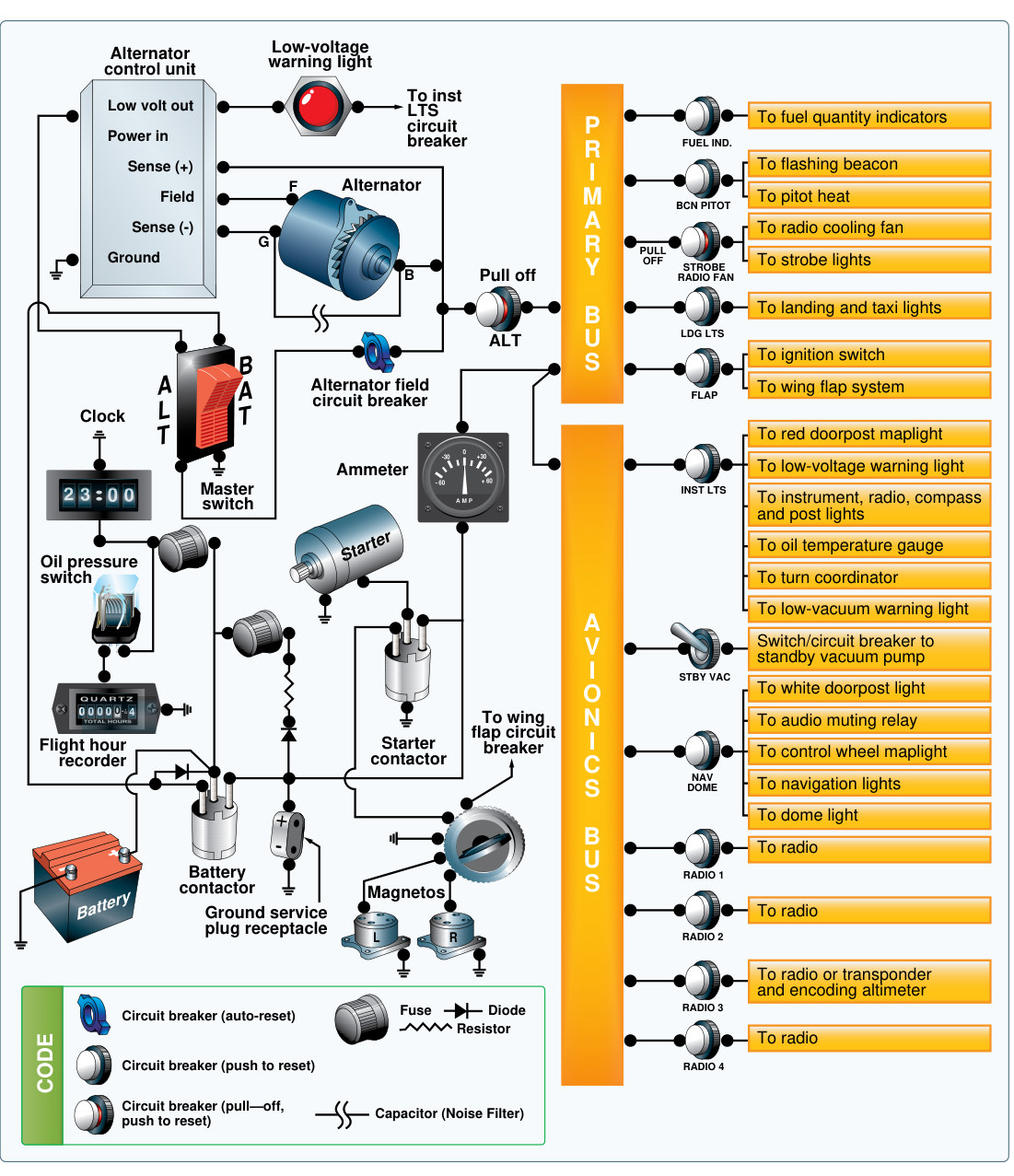
The electrical system in a light airplane is straightforward once you see the flow. An engine-driven alternator, or on older aircraft a generator, produces electrical power that both charges the battery and supplies the equipment through a bus bar. The battery’s main jobs are to start the engine and to serve as a backup source of power. A master switch turns the system on and off, and circuit breakers or fuses protect individual circuits from overload. The ammeter is the key gauge: it shows whether the battery is being charged by the alternator or is discharging, which is your primary clue to an alternator failure. If the alternator quits, the airplane runs only on the battery, whose charge is limited, so the correct response is to reduce electrical load by turning off nonessential equipment and plan to land before the battery is exhausted. Understanding this flow turns an electrical warning into a managed situation rather than a surprise.
Key terms
- Alternator
- The engine-driven device that generates electrical power and charges the battery.
- Bus bar
- The distribution point that supplies electrical power to the aircraft equipment.
- Ammeter
- A gauge showing whether the battery is charging or discharging.
Sources & references · 1 · 1 linked
Every claim traces to a source — paraphrased knowledge elements pointing at the governing FAA publication. Items marked verified have been checked against the retrieved source text; the rest are pending verification. Where the exact page or regulation has been located in a retrieved document, the source links straight to it.
- PHAK Ch. 7 — Pilot’s Handbook of Aeronautical Knowledge verifiedPHAK Ch. 7 (p. 161)
Community
Ask for more detail or suggest additions to make this lesson better. Community input — not authoritative and not CFI-reviewed.
Sign in or create a free account to join the conversation.
No comments yet — be the first to help improve this lesson.