VFR · Lesson 43 · 9 min · ACS PA.I.C
Reading METARs and TAFs
Reviewed by a panel of three CFIs + AI review
Summary
A METAR observes current weather in a fixed order with Celsius temperatures and an A-prefixed altimeter; a TAF forecasts nearby conditions with FM/TEMPO/BECMG change groups. Observation now, forecast later.
Also watch
Quick check ▾
One question on what you just read.
Question 1 of 1
METAR interpretation · Topic mastery: Not started
Exit0 of 1 answered
In a METAR, the group "A2992" represents what?
Why this matters in flight
The METAR and TAF are the two products you will read before every flight. Decoding them fluently turns a wall of abbreviations into a clear picture of what the weather is doing now and what it is expected to do while you are en route.
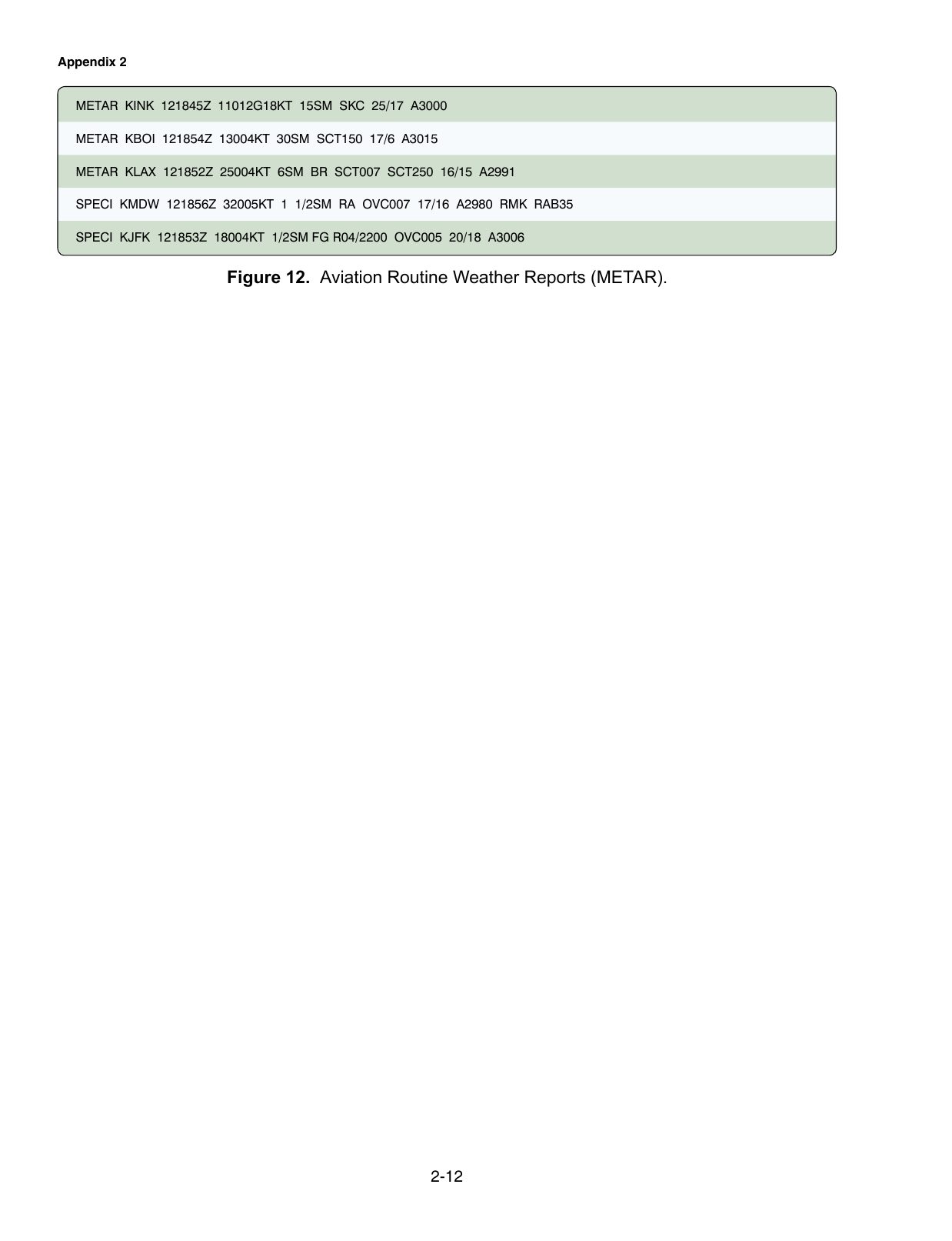
A METAR is an observation of current surface weather at an airport. It runs in a fixed order: the station identifier, the day and time in Zulu (UTC), wind direction and speed, visibility, weather phenomena, sky condition with cloud bases, the temperature and dewpoint in Celsius, and the altimeter setting prefixed with the letter A. Sky cover is coded FEW, SCT (scattered), BKN (broken), or OVC (overcast), and the ceiling is the lowest broken or overcast layer. A TAF is the forecast counterpart, describing expected conditions within about five statute miles of the airport, usually for 24 to 30 hours. It looks much like a METAR but adds change groups: FM marks a rapid change from a stated time, TEMPO marks brief temporary fluctuations, and BECMG marks a gradual change. Exam questions reward exact decoding: the date-time group "091753Z" is the 9th day at 1753 Zulu; wind "24016G24KT" gusts to 24 knots; remarks like "RAB35" mean rain began 35 minutes past the hour; and a TAF header carries a valid period such as "0912/1012" — from the 9th at 1200Z to the 10th at 1200Z. From any coded report you should also be able to name the flight category: VFR is ceiling greater than 3,000 feet AND visibility greater than 5 miles; marginal VFR is a ceiling 1,000 to 3,000 feet or visibility 3 to 5 miles; IFR is 500 to below 1,000 feet or 1 to below 3 miles; and low IFR is below 500 feet or below 1 mile. The key distinction to keep straight is that a METAR reports what is observed now, while a TAF forecasts what is expected later.
Key terms
- METAR
- A routine observation of current surface weather at an airport.
- TAF
- A terminal aerodrome forecast of expected conditions near an airport.
- Zulu time
- Coordinated Universal Time (UTC), used for all aviation weather.
- Flight categories
- VFR, MVFR, IFR, LIFR — determined by ceiling and visibility from a coded report.
Sources & references · 2 · 2 linked
Every claim traces to a source — paraphrased knowledge elements pointing at the governing FAA publication. Items marked verified have been checked against the retrieved source text; the rest are pending verification. Where the exact page or regulation has been located in a retrieved document, the source links straight to it.
- AIM 7-1 / Aviation Weather Handbook FAA-H-8083-28 — Aeronautical Information Manual verifiedAIM 7-1 (p. 517)
- AIM 7-1 / Aviation Weather Handbook FAA-H-8083-28 — Aeronautical Information Manual verifiedAIM 7-1 (p. 517)
Community
Ask for more detail or suggest additions to make this lesson better. Community input — not authoritative and not CFI-reviewed.
Sign in or create a free account to join the conversation.
No comments yet — be the first to help improve this lesson.