VFR · Lesson 67 · 8 min · ACS PA.I.H
Assessing and Mitigating Risk
Reviewed by a panel of three CFIs + AI review
Summary
Estimate risk from likelihood and severity, then mitigate it deliberately. Recognize get-there-itis as a psychological risk and beat it with personal minimums set before the flight.
Also watch
Quick check ▾
One question on what you just read.
Question 1 of 1
Risk assessment and mitigation · Topic mastery: Not started
Exit0 of 1 answered
A risk-assessment matrix evaluates a hazard by combining which two factors?
Why this matters in flight
Risk is not a vague feeling; it can be estimated and reduced. Learning to judge how likely and how severe a hazard is, and to spot the pressure of get-there-itis, lets you act before a small problem grows into an accident.
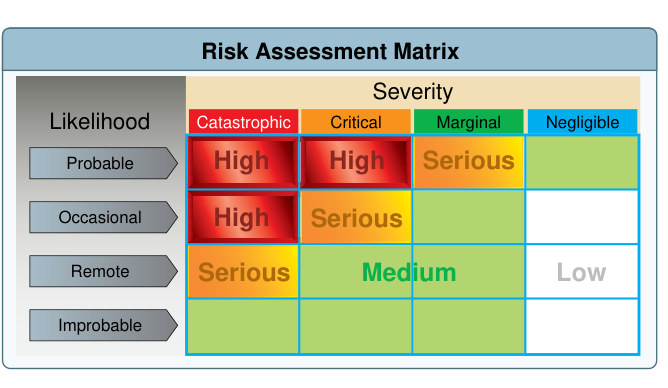
Risk assessment combines two things: how likely an event is and how severe its consequences would be. A simple risk-assessment matrix maps likelihood against severity to sort hazards from low to high, which helps a pilot focus on what matters most. Once ranked, risks are mitigated — reducing either their likelihood or their severity — through strategies such as avoiding the hazard, transferring it, or accepting it only when it has been driven as low as reasonably practical. One of the most dangerous risks is not mechanical but psychological: get-there-itis, or plan-continuation bias, is the strong urge to reach the destination that blinds a pilot to deteriorating weather and tempts pressing on when the smart choice is to divert or cancel. It is a form of external pressure and a factor in many weather accidents. The best defense is decided in advance: firm personal minimums and a predetermined decision point remove the temptation to rationalize in the moment.
Key terms
- Risk-assessment matrix
- A grid mapping likelihood against severity to rank hazards.
- Mitigation
- Reducing the likelihood or severity of an identified risk.
- Get-there-itis
- Plan-continuation bias: the urge to reach a destination despite worsening conditions.
Sources & references · 2 · 2 linked
Every claim traces to a source — paraphrased knowledge elements pointing at the governing FAA publication. Items marked verified have been checked against the retrieved source text; the rest are pending verification. Where the exact page or regulation has been located in a retrieved document, the source links straight to it.
- Risk Management Handbook / risk assessment — Risk Management Handbook FAA-H-8083-2A (p. 36)
- PHAK Ch. 2 / hazardous tendencies — Pilot’s Handbook of Aeronautical Knowledge verifiedPHAK Ch. 2 (p. 40)
Community
Ask for more detail or suggest additions to make this lesson better. Community input — not authoritative and not CFI-reviewed.
Sign in or create a free account to join the conversation.
No comments yet — be the first to help improve this lesson.