VFR · Lesson 70 · 9 min · ACS PA.IX
Fire, Smoke and Electrical Failures
Reviewed by a panel of three CFIs + AI review
Summary
Starve an engine fire by cutting fuel and land immediately; isolate an electrical fire with the master switch and shed load; and use an emergency descent to lose altitude fast while staying within limits.
Also watch
Quick check ▾
One question on what you just read.
Question 1 of 1
Engine fire in flight · Topic mastery: Not started
Exit0 of 1 answered
What is the general principle for responding to an in-flight engine fire?
Why this matters in flight
Fire and smoke are among the few emergencies where getting the airplane on the ground quickly outweighs almost everything else. Knowing how to starve a fire, isolate an electrical fault, and descend rapidly within limits can save a flight that is filling with smoke.
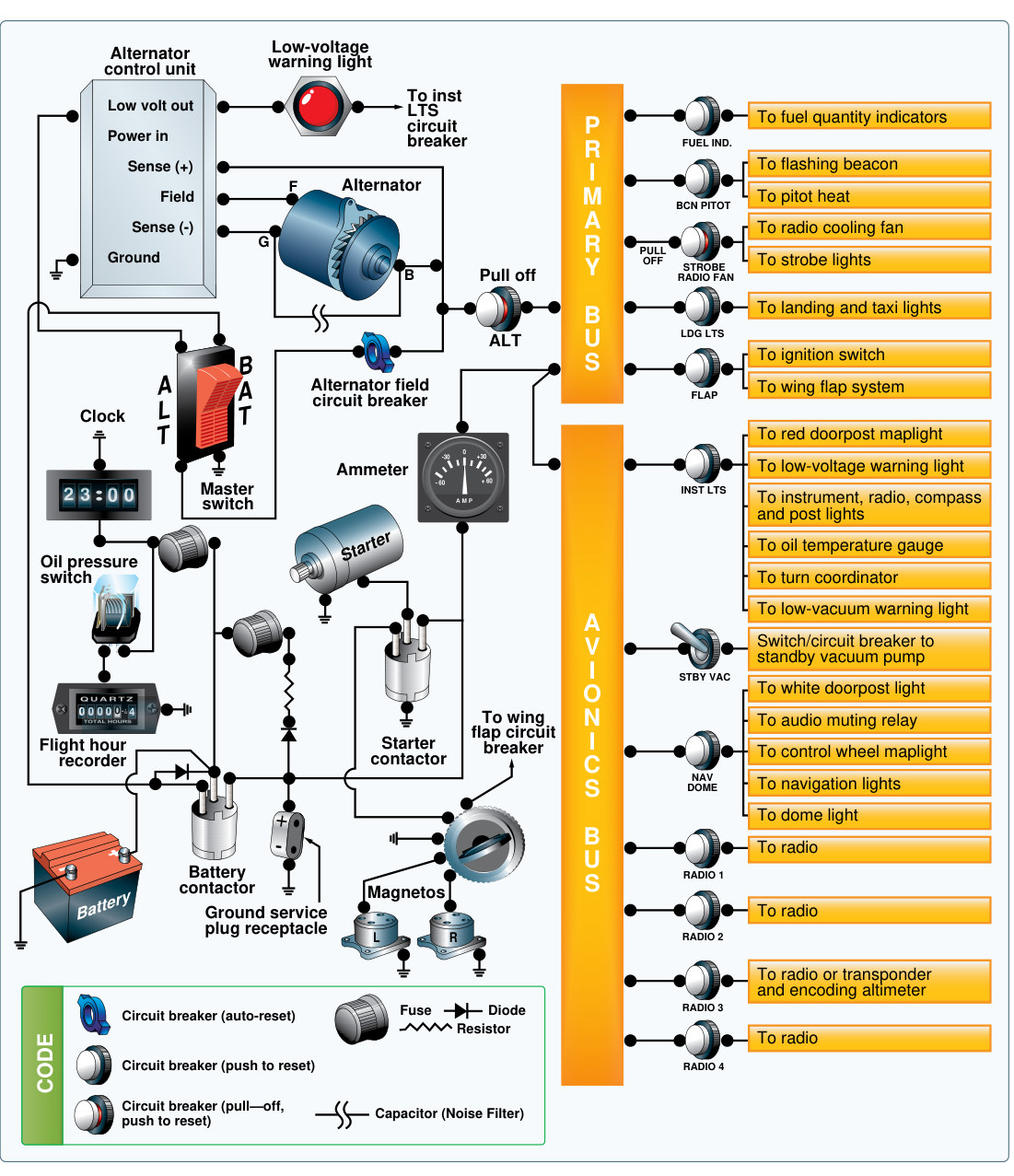
An in-flight engine fire is fought by cutting off the fuel that feeds it: mixture to idle cutoff, fuel selector off, and fuel pump off, then shutting cabin heat and defrost so smoke cannot enter. The pilot establishes a glide and lands as soon as possible, and increasing airspeed may help extinguish the flames — but the exact steps come from the aircraft checklist. An electrical fault is different: a discharging ammeter, a tripped breaker, or the smell of burning insulation warns of trouble. The response is to reduce electrical load, and for an actual electrical fire to switch the master and nonessential equipment off to remove the source while ventilating the smoke, conserving battery power for the radios and instruments you truly need to land. When a fire, a medical problem, or another urgent situation demands losing altitude fast, the emergency descent reduces power, configures per the flight manual — which may call for gear, flaps, or a bank to steepen the descent — and descends at the specified airspeed without exceeding any structural or configuration limit. The common thread is decisive action that stays inside the airplane’s limits.
Key terms
- Idle cutoff
- The mixture position that stops fuel flow, used to starve an engine fire.
- Electrical load shedding
- Turning off nonessential electrical equipment to isolate a fault and save the battery.
- Emergency descent
- A rapid, controlled loss of altitude flown within structural and configuration limits.
Sources & references · 3 · 3 linked
Every claim traces to a source — paraphrased knowledge elements pointing at the governing FAA publication. Items marked verified have been checked against the retrieved source text; the rest are pending verification. Where the exact page or regulation has been located in a retrieved document, the source links straight to it.
- Airplane Flying Handbook / engine fire in flight — Airplane Flying Handbook verifiedFAA-H-8083-3C (p. 285)
- PHAK / electrical failure and smoke — Pilot’s Handbook of Aeronautical Knowledge verifiedPilot’s Handbook (document)
- Airplane Flying Handbook / emergency descent — Airplane Flying Handbook verifiedFAA-H-8083-3C (p. 82)
Community
Ask for more detail or suggest additions to make this lesson better. Community input — not authoritative and not CFI-reviewed.
Sign in or create a free account to join the conversation.
No comments yet — be the first to help improve this lesson.