VFR · Lesson 71 · 8 min · ACS PA.IX
Abnormal Systems: Partial Power and Pitot-Static Failures
Reviewed by a panel of three CFIs + AI review
Summary
Treat partial power loss as a real warning: troubleshoot carb ice, plugs, magnetos, and fuel while planning to land. For pitot-static blockages, know the failure signatures and use the alternate static source and pitch-and-power flying.
Also watch
Quick check ▾
One question on what you just read.
Question 1 of 1
Partial power loss and rough running · Topic mastery: Not started
Exit0 of 1 answered
The engine runs rough with partial power loss. Which is an appropriate troubleshooting step while planning for a landing?
Why this matters in flight
Not every failure is total. A rough-running engine or a blocked instrument port is an abnormal situation you can often manage in flight — if you can diagnose it calmly and know which backup to reach for before it becomes an emergency.
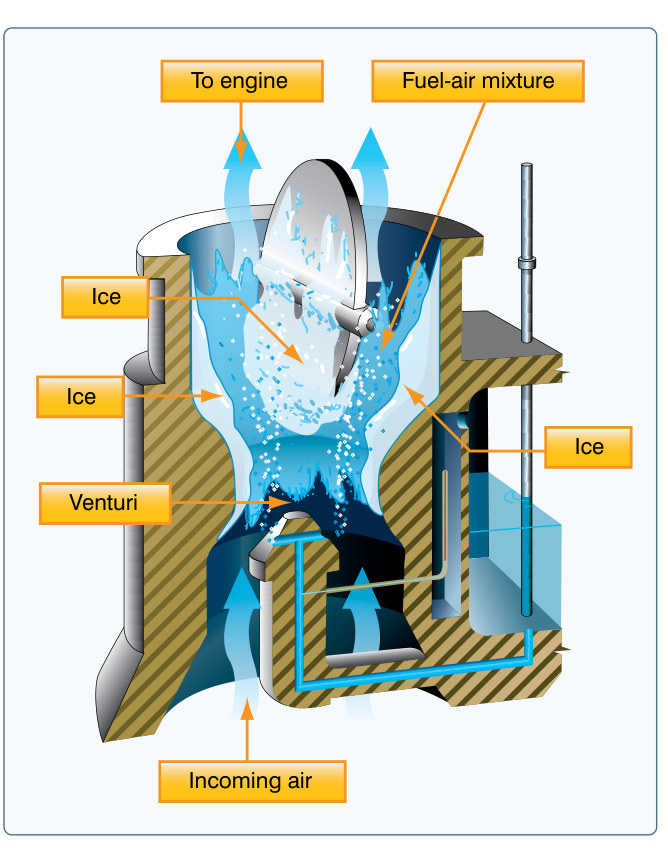
A partial power loss or rough-running engine is a serious warning even when some power remains. The usual suspects are carburetor ice, a fouled spark plug, a failing magneto, or a fuel-system problem, and the pilot works through them methodically: carburetor heat for suspected ice, mixture and throttle adjustments, magneto checks, and switching fuel tanks — all while continuously planning for a possible forced landing in case the engine quits entirely. Pitot-static failures attack the instruments rather than the engine. If the pitot ram inlet is blocked but its drain hole stays open, the airspeed indicator drops toward zero; when BOTH the pitot opening and the drain hole are blocked, the trapped pressure makes the airspeed indicator behave like an altimeter, reading higher as you climb and lower as you descend. A blocked static port throws off the airspeed indicator, altimeter, and vertical speed indicator together. The fix is the alternate static source — and if the airplane has none, the traditional last resort, where the POH permits and teaches it, is to break the glass of the VERTICAL SPEED INDICATOR, the static instrument you can best do without, which opens the case to cabin static pressure (expect the VSI to then read reversed). Fly known pitch-and-power settings as a reliable backup while you sort out which instruments you can still trust — and remember the companion cue from the engine side: with a fixed-pitch propeller, carburetor ice first shows as a decrease in RPM.
Key terms
- Carburetor ice
- Ice in the carburetor venturi that reduces power; cleared with carburetor heat.
- Blocked pitot tube
- Ram inlet blocked with drain open drops the ASI toward zero; pitot opening and drain both blocked traps pressure so the ASI acts like an altimeter.
- Alternate static source
- A backup static port used when the primary static port is blocked.
Sources & references · 2 · 2 linked
Every claim traces to a source — paraphrased knowledge elements pointing at the governing FAA publication. Items marked verified have been checked against the retrieved source text; the rest are pending verification. Where the exact page or regulation has been located in a retrieved document, the source links straight to it.
- PHAK / partial power loss and rough running — Pilot’s Handbook of Aeronautical Knowledge verifiedPilot’s Handbook (document)
- PHAK / pitot-static system failures — Pilot’s Handbook of Aeronautical Knowledge verifiedPilot’s Handbook (document)
Community
Ask for more detail or suggest additions to make this lesson better. Community input — not authoritative and not CFI-reviewed.
Sign in or create a free account to join the conversation.
No comments yet — be the first to help improve this lesson.