VFR · Lesson 48 · 9 min · ACS PA.VI · ACS PA.V
Pilotage, Dead Reckoning and Time-Speed-Distance
Reviewed by a panel of three CFIs + AI review
Summary
Pilotage navigates by landmarks, dead reckoning navigates by computation, and both rest on the distance-equals-speed-times-time relationship used for every ETA and fuel-reserve calculation.
Also watch
Quick check ▾
One question on what you just read.
Question 1 of 1
Pilotage by ground references · Topic mastery: Not started
Exit0 of 1 answered
Pilotage is best described as navigation by what means?
Why this matters in flight
Before you touch a radio or a GPS, you navigate by looking outside and by doing arithmetic. These two skills — pilotage and dead reckoning — are the foundation every cross-country flight is built on, and they keep you found if the electronics quit.
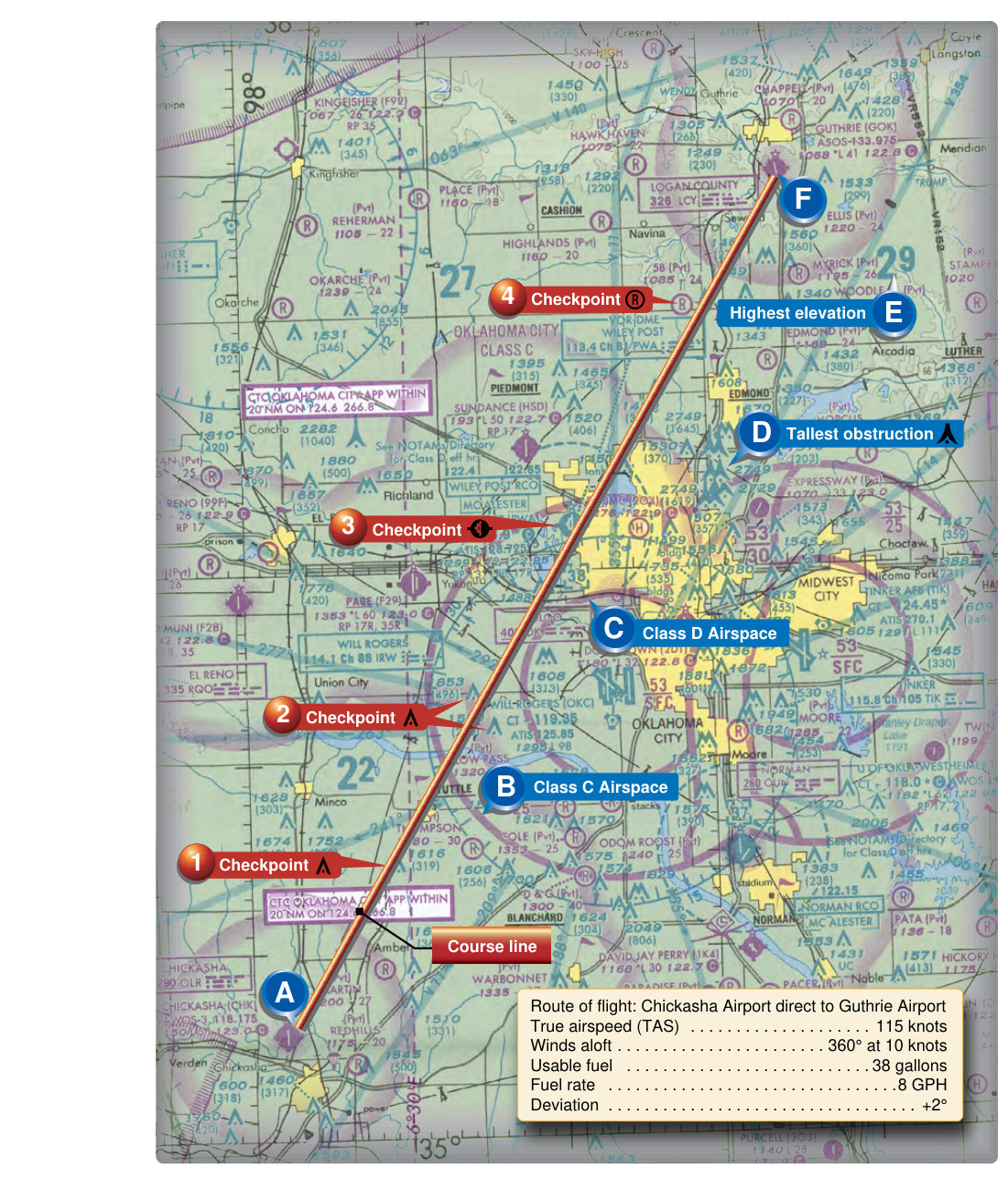
Pilotage is simply navigating by what you can see: you match rivers, roads, railroads, towns, and lakes on the ground against the same features drawn on your sectional chart. It works best low and in good visibility. Dead reckoning is the arithmetic counterpart: starting from a known point, you use a planned true course, the forecast wind, and your true airspeed to compute a heading, a groundspeed, and the time and fuel for each leg. The two methods reinforce each other — dead reckoning tells you where and when to expect the next landmark, and pilotage confirms you are where the math says. All of this rests on the time-speed-distance relationship: distance equals speed times time. Knowing your groundspeed, you divide leg distance by groundspeed to get leg time, and multiply time by the fuel burn rate to get fuel required, which is how every ETA and reserve check is made.
Key terms
- Pilotage
- Navigating by reference to visible ground landmarks.
- Dead reckoning
- Computing position from heading, groundspeed, time, and distance.
- Groundspeed
- The airplane’s speed over the ground, used for time and fuel planning.
Sources & references · 3 · 3 linked
Every claim traces to a source — paraphrased knowledge elements pointing at the governing FAA publication. Items marked verified have been checked against the retrieved source text; the rest are pending verification. Where the exact page or regulation has been located in a retrieved document, the source links straight to it.
- PHAK Ch. 16 — Pilot’s Handbook of Aeronautical Knowledge verifiedPHAK Ch. 16 (p. 388)
- PHAK Ch. 16 — Pilot’s Handbook of Aeronautical Knowledge verifiedPHAK Ch. 16 (p. 388)
- PHAK Ch. 16 — Pilot’s Handbook of Aeronautical Knowledge verifiedPHAK Ch. 16 (p. 388)
Community
Ask for more detail or suggest additions to make this lesson better. Community input — not authoritative and not CFI-reviewed.
Sign in or create a free account to join the conversation.
No comments yet — be the first to help improve this lesson.