VFR · Lesson 25 · 7 min · ACS PA.I.F
How CG Position Affects Handling
Reviewed by a panel of three CFIs + AI review
Summary
Forward CG = more stable, higher stall speed, heavier controls; aft CG = less stable, lower stall speed, harder recovery. Stay within both limits.
Also watch
Quick check ▾
One question on what you just read.
Question 1 of 1
Effects of forward and aft CG · Topic mastery: Not started
Exit0 of 1 answered
What is one effect of loading an airplane with a more forward center of gravity?
Why this matters in flight
The same airplane flies very differently depending on where the CG sits. Understanding the trade-offs explains why the limits exist and why exceeding them is dangerous rather than merely inconvenient.
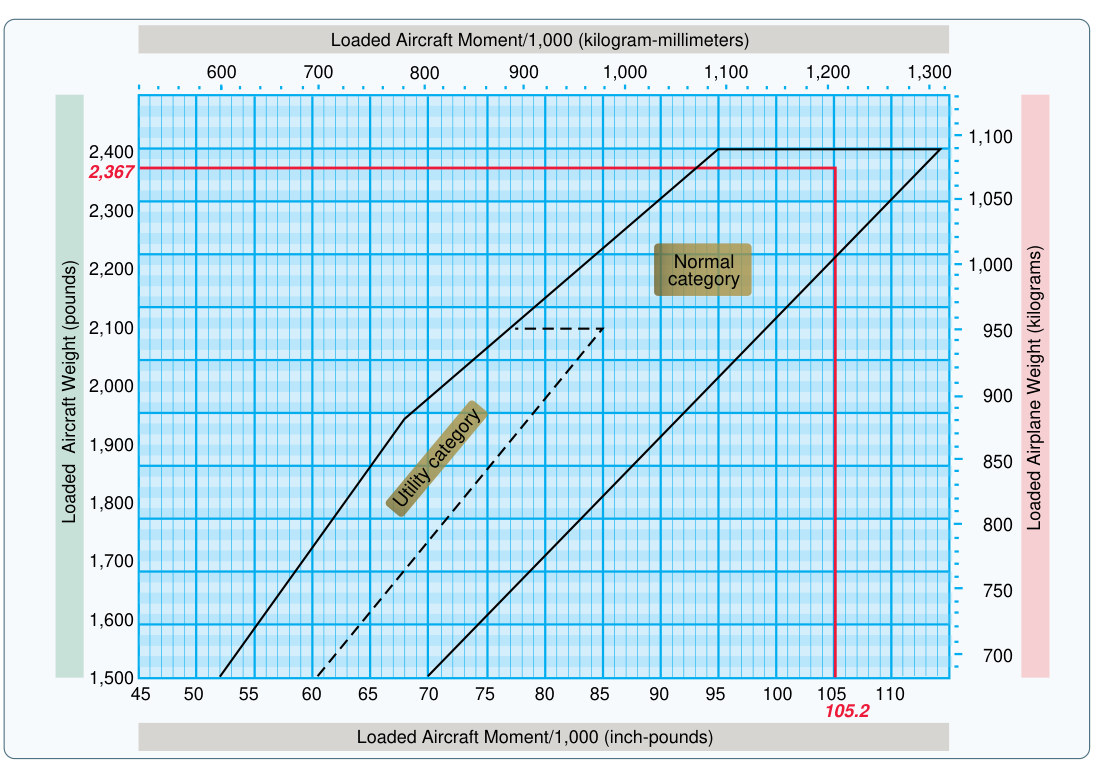
Center of gravity position is a balance between stability and controllability. A forward CG makes the airplane more stable — it wants to return to level flight — but the tail must pull down harder, which raises the stall speed, adds drag, and demands more elevator force to flare. Too far forward and there may not be enough elevator to hold the nose up at landing speed. An aft CG does the opposite: it makes the airplane lighter on the controls and more efficient, and it lowers the stall speed, but it reduces stability so the airplane is less willing to recover on its own. Too far aft and stall or spin recovery can become difficult or impossible. This is why the aft limit is the more safety-critical of the two and why the approved envelope must never be exceeded in either direction.
Key terms
- Longitudinal stability
- The pitch tendency of the airplane to return to trimmed flight.
- Forward limit
- The most forward CG allowing adequate elevator authority.
- Aft limit
- The most rearward CG at which the airplane remains safely controllable.
Sources & references · 3 · 3 linked
Every claim traces to a source — paraphrased knowledge elements pointing at the governing FAA publication. Items marked verified have been checked against the retrieved source text; the rest are pending verification. Where the exact page or regulation has been located in a retrieved document, the source links straight to it.
- FAA-H-8083-3 (stability) — Airplane Flying Handbook verifiedFAA-H-8083-3C (p. 386)
- FAA-H-8083-3 (stability) — Airplane Flying Handbook verifiedFAA-H-8083-3C (p. 386)
- FAA-H-8083-1 Ch. 4 — Aircraft Weight and Balance Handbook verifiedFAA-H-8083-1A Ch. 4 (p. 43)
Community
Ask for more detail or suggest additions to make this lesson better. Community input — not authoritative and not CFI-reviewed.
Sign in or create a free account to join the conversation.
No comments yet — be the first to help improve this lesson.